

Knowledge is the first step. Confidence is how we change care.
When staff are already stretched and carrying a full mental load, we can’t rely on them to remember every detail from a training while they’re also responding to the needs in front of them. They need practical support where the work happens.
- cUSTOMIZED
- IN THE MOMENT SUPPORT
- CONFIDENCE
- IN THE MOMENT SUPPORT
- ORGANIZATION
- IN THE MOMENT SUPPORT
- CUSTOMIZED
- IN THE MOMENT SUPPORT
- ORGANIZATION
- IN THE MOMENT SUPPORT
- CUSTOMIZED
Companion App
Know what to prepare and what to do next. Plan person-centered activities, follow clear steps, print them, and use videos to show each step.
Together Table™ Workspace
Make it clear where the activity happens and where to begin. A prepared, hands-on space organizes the materials and makes the activity easier to see and follow.
3•5•8 Method™
Adjust the activity and environment to fit the person. Change the number of steps, arrange the space, and offer the right amount of support so each person can take part.
Shaped by Professionals
An occupational therapist and gerontologist described MonteBloom as:
“An approach that translates sound therapeutic principles into tools ordinary caregivers can actually use.”
They noted that a prepared workspace can reduce cognitive and sensory demands and provide consistent cues. They also connected adapting activities to different ability levels with activity grading—finding the “just-right challenge”—and said that explaining each activity’s purpose helps put clinical reasoning into caregivers’ hands.
A Montessori researcher raised important questions about choosing activities that fit a person’s age and development, grounding the approach in Montessori principles, and making sure the app supports hands-on activities with real materials. That feedback helped us clarify that the app supports professionals in preparing the activity, while the person focuses on doing it.
We’ve also gathered feedback from other occupational therapists and a behavior therapist as we shape the system for real-world use.
I want this in my organization
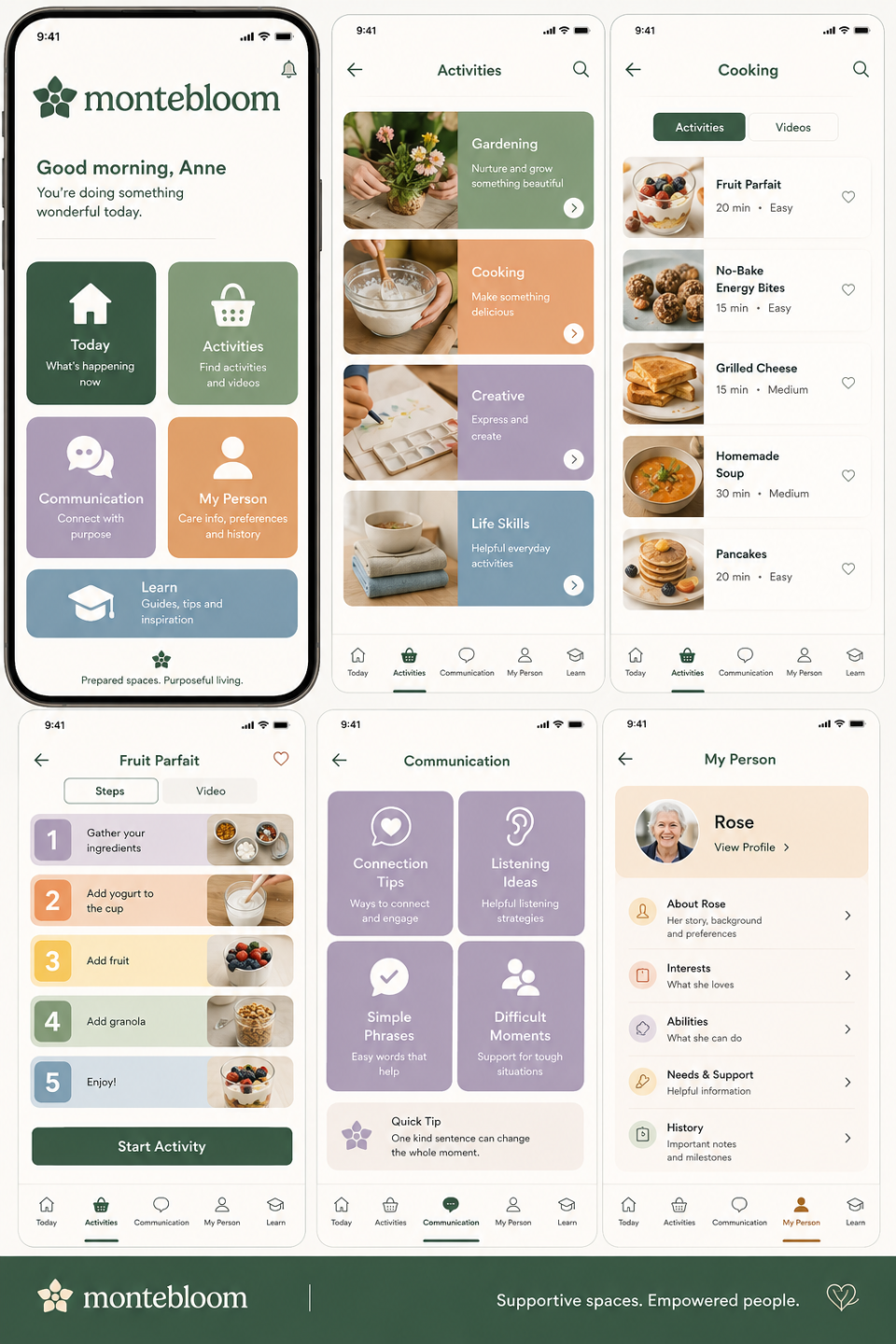
Companion App: help for the person supporting the activity
The Companion App helps staff plan ahead and feel prepared before an activity begins. Create a profile for each person with details like their interests, strengths, communication preferences, and support needs. Use calendars to plan activities and preparation lists to gather materials and set up the space.
Each activity includes clear instructions, setup guidance, and “Copy Me” videos that model the steps. Your team can personalize pictures and wording to better match the person and the materials they use. And if a screen isn’t right for the moment, print the steps and use them at the table.
The app is designed to support the staff member or caregiver leading the activity. The person can take part using the real materials and workspace, without needing to use the app themselves.
Organizations can also tailor the app and materials to their programs, routines, and branding.
Together Table™ Workspace: a clear place to start
A prepared workspace helps make the activity easier to understand. The mat marks out where the activity happens and gives the materials a clear place on the table. It can help show, “This is what we’re doing, and this is where we begin.”
Instead of asking someone to make sense of everything at once, staff can arrange only the materials needed for the activity. The person can see and touch the real items, follow the workspace, and take part one step at a time. This draws on the Montessori idea of preparing the environment so the space itself helps support participation.
3•5•8 Method™: adjust the steps and the space
The Together Table™ workspace comes in three versions: 3-step, 5-step, and 8-step. Each mat matches the activity’s step version and gives the materials a clear place on the table. The prepared space helps show what you’re doing, where to begin, and what comes next—making the sequence easier to see and follow.
Staff choose the version that makes sense for the person and the activity. ( Quiz to help staff if still unsure).
The number isn’t a label for someone’s ability or diagnosis. More steps can give someone clearer directions and a chance to take on more of the task. Fewer steps can make an activity feel manageable when too much detail would get in the way.
The method also asks staff to look at the environment: Are the materials easy to see and reach? Is the workspace clear? Would changing the setup, wording, pictures, or tools help the person take part? Small changes to the space and instructions can make an activity easier to follow.
MonteBloom is growing across different settings
We’re hearing from organizations and professionals who support people with different needs:
-
Home care agencies supporting older adults living with dementia and people with disabilities at home.
-
Adult day programs serving adults with dementia or other support needs.
-
Behavior therapists working with children and adults with autism or developmental disabilities.
-
Professional organizers helping people manage everyday tasks, including older adults and people with ADHD, memory, or executive function challenges.
-
Disability organizations supporting young adults with intellectual and developmental disabilities.
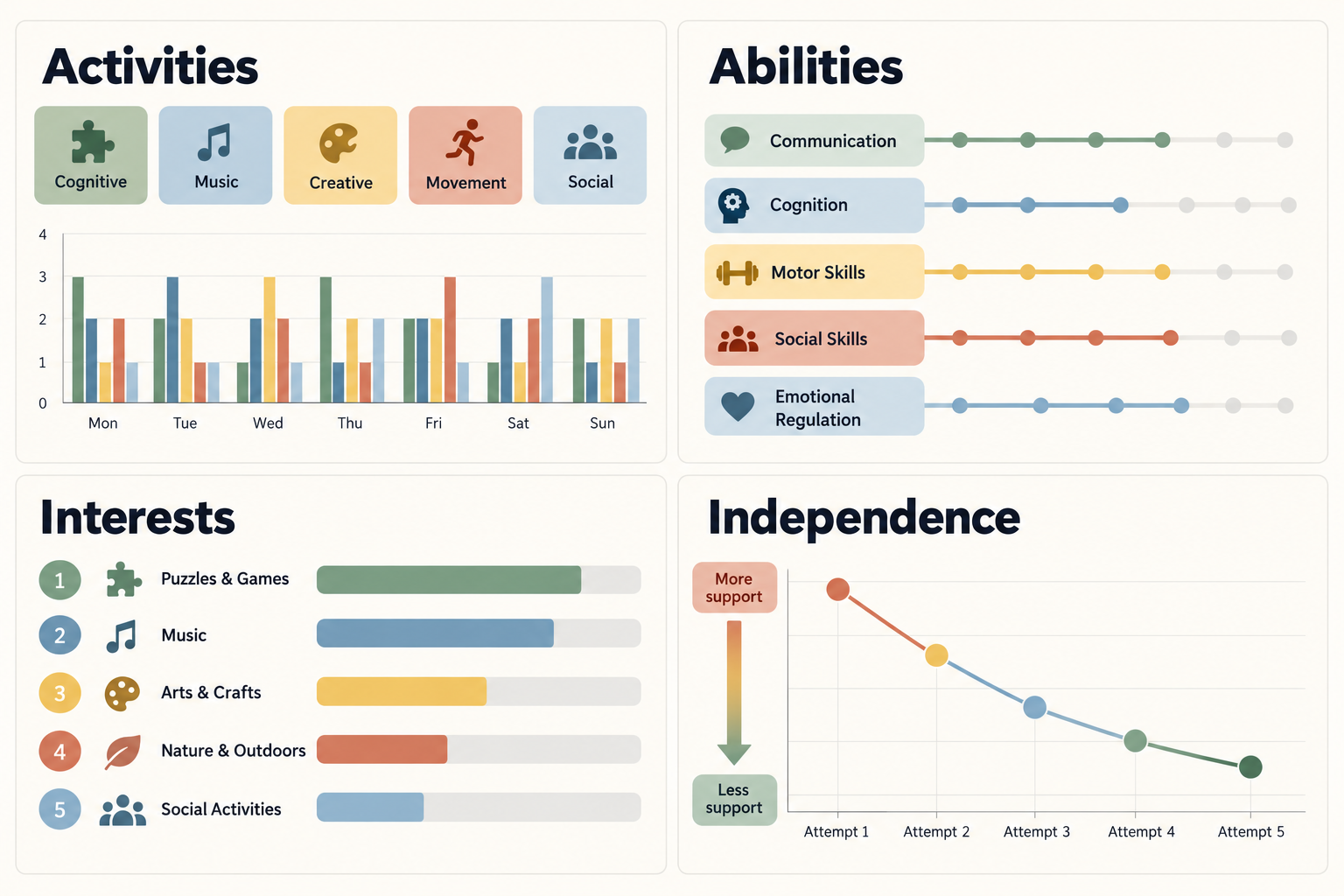
Track the care you want to provide—and show it in practice
A holistic approach should be more than words in a mission statement. Your organization needs a way to see whether those practices are showing up in everyday care, what’s helping people take part, and where your team may need more support.
That gives your team a clearer picture of what’s working and what could improve. It also helps you show families, partners, and funders what makes your organization stand out: a thoughtful approach to care that staff can put into practice.

Email: montebloom@gmail.com
MonteBloom helps parents, caregivers, and professionals turn everyday activities into opportunities for greater independence. Through simple, adaptable tools and the 3•5•8 Method™, we make it easier to create prepared spaces that support participation, confidence, and independence—at every age and ability. home.
Join Our FREE Newsletter: MonteBloom Moments
Your weekly dose of creativity, resources, practical tips, and more.
Prepared spaces. Empowered people.
